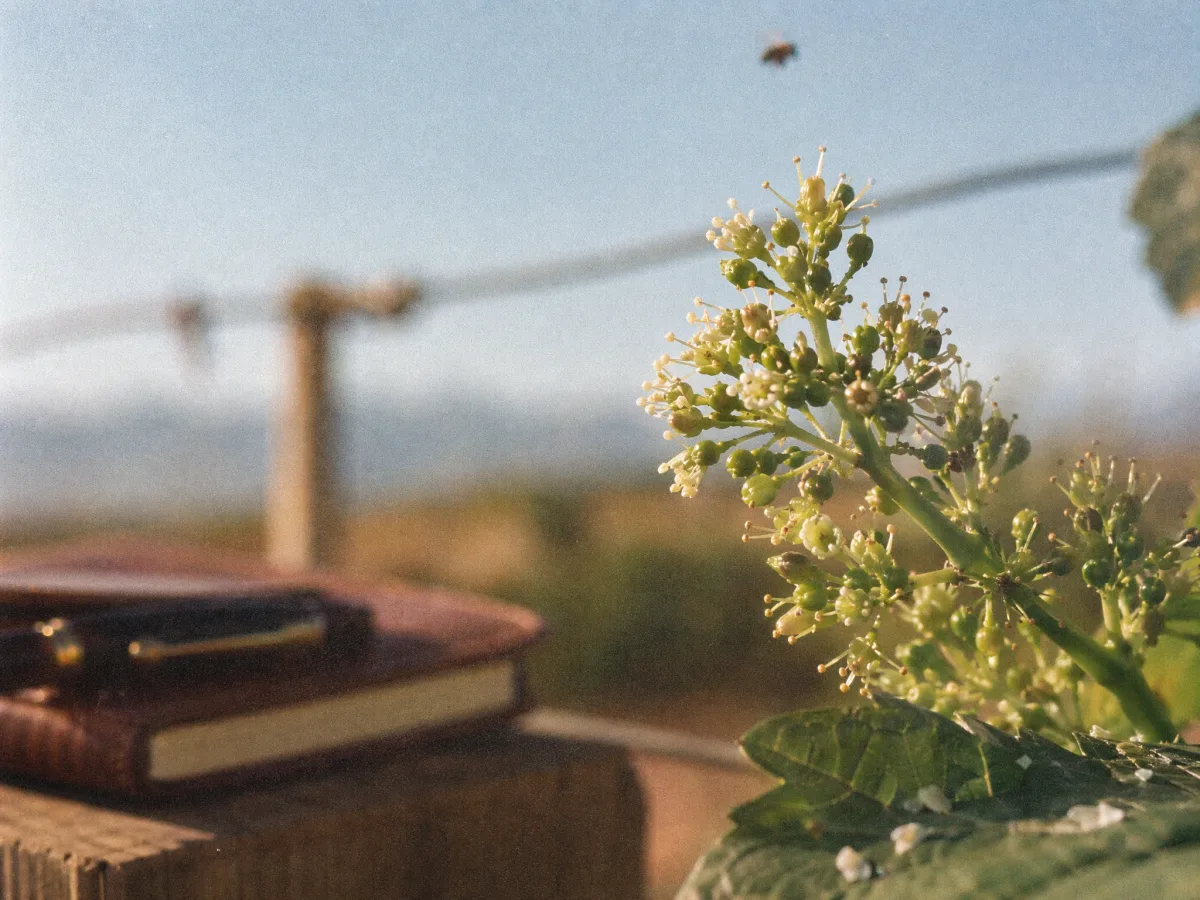
For eleven years we walked the flowering week with clipboards, counting clusters on ten marked vines per row. This is the year we put the clipboards away. The reason is not laziness — it is that the numbers were lying to us, and the walk was telling the truth all along.
When we started this house in 2016 we were taught, correctly, that a winemaker who does not measure is a winemaker who is guessing. So from 2017 onward we did what every good oenology textbook tells you to do during flowering: we marked ten vines in each block, counted the cluster primordia at bud‑break, counted them again at flowering, and ran the percentage of set. We kept these numbers in a leather notebook that now has eleven years of handwriting in it.
The notebook is beautiful. The numbers were not useful.
Here is what we did not see for the first six or seven years. The ten vines we marked were the ten vines that were easiest to find — the ones at the head of the row, the ones next to the post, the ones we could walk to without stepping through a crop. They were not representative. They were convenient. A number from a non‑representative sample will always be a confident answer to the wrong question.
We discovered this the hard way in 2022. The numbers said cluster set would be seventy‑eight percent, which was the best percentage we had recorded. The walk through the block, at the same time, said otherwise — the interior rows were lighter than the edge rows by what any experienced pruner could feel in their hands. We went with the numbers. We planned for a big harvest. The big harvest did not arrive. We were out by almost twenty percent.
What we do now is simpler, slower, and more honest. Two people walk the block together once every three days during flowering. We do not count. We look. We touch the shoulders of the clusters to feel the set. We talk about what the wind did last night and what the leaf temperature feels like at eleven in the morning. We write one short paragraph per block in a new notebook. No percentages.
The first year of this — 2025 — our end‑of‑flowering estimate for marselan was within three percent of the actual harvest weight. The best measured estimate we ever made with the clipboard was nine. It turns out that two people walking a block and talking about what they see is a better instrument than any number we were capable of generating.
The clipboards are in a drawer in the barn. We will not throw them out. But we will not open them again.
When we bottled the 2019 vintage in 2021 and decided, quietly, that the house was ready to let some of it leave the country, we were given the standard list of advice. Go to ProWein. Get a distributor. Hire a translator. Lower the price for "emerging market" pricing. Three of these turned out to be mistakes. Here is what they cost us and what we learned.
Mistake one. ProWein. We flew to Düsseldorf in the spring of 2022 with fourteen bottles, a rented table in the China pavilion, and high hopes. The fair was huge, exhausting, and — for a house making eight thousand bottles a year — fundamentally the wrong instrument. We were one of sixty small Chinese producers pouring for buyers who were there to meet larger houses. We left with three business cards and a very clear lesson: a generic trade show is built for scale, and a small house does not need scale.
Mistake two. Translating ourselves into a language we do not speak. In 2022 we paid a well‑meaning consultant to "translate our story for Western palate descriptors." The resulting brochure described our wines using the phrase New World ambition with Old World restraint. We cringed. Worse, when a sommelier in Hong Kong asked us what we thought of the phrase, we could not defend it — because we did not believe it. We burned the brochures. The new one, which has been on the cellar door for two years, is three sentences long and was written by us at the kitchen table.
Mistake three. Pricing down. Early on we were told, repeatedly, that a Chinese wine priced at the same level as a Bordeaux cru bourgeois would not sell. So for the first export vintage we priced the Cabernet twenty percent below its cellar‑door price in China. We sold out. Then, at the reorder, the importer — in good faith — asked if we could go twenty percent lower again. We declined, and he moved on. We had trained him to expect a discount that did not reflect the wine.
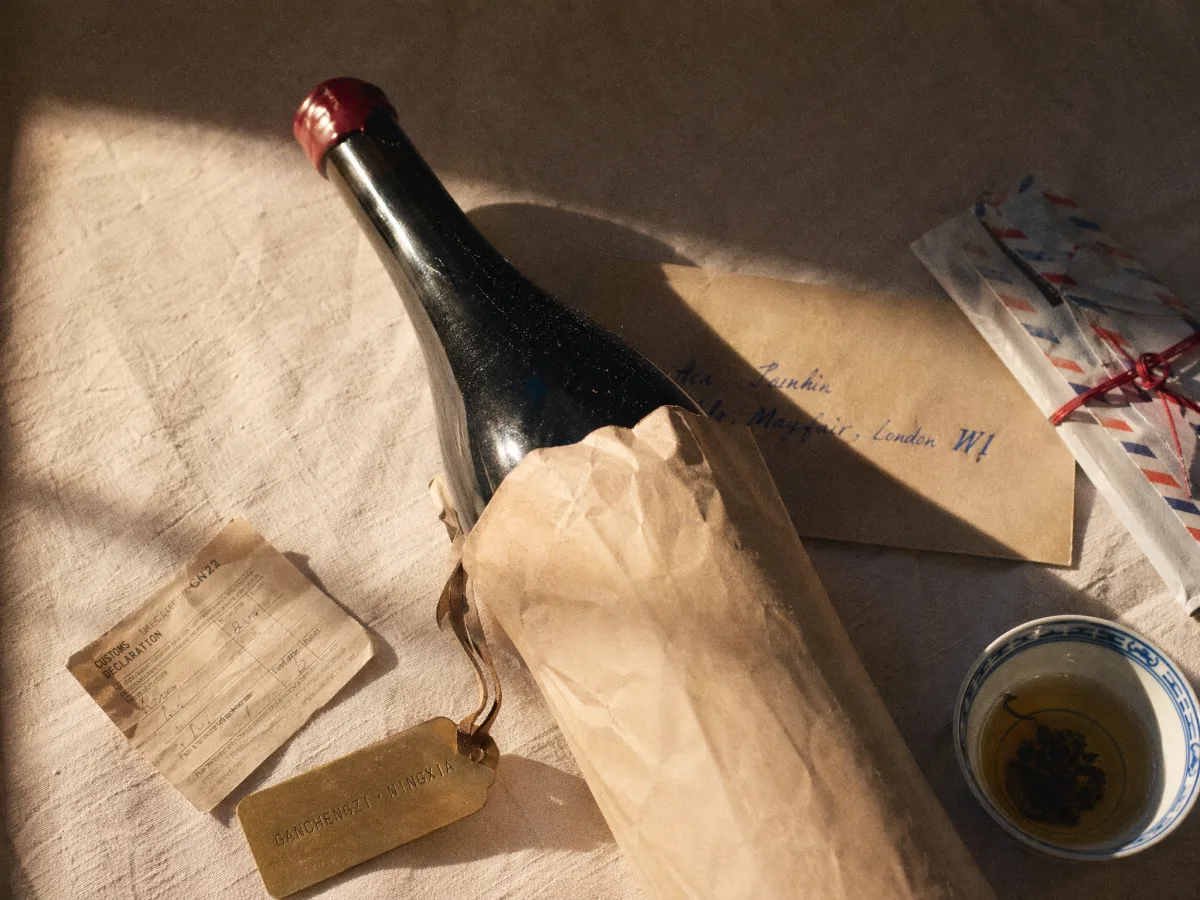
The one thing that worked was smaller and much slower. It began when a sommelier at a restaurant in Mayfair — someone we had never met — tasted the 2022 Marselan at a dinner in Beijing and wrote us a letter the next week. The letter said, roughly: I have fifty reds on this list; send me twelve bottles; I will tell you in three months whether I can place them. Three months later he placed twelve more. Then thirty‑six. Then a hundred and twenty.
That is the whole strategy. One sommelier, then one more, then one more. No distributors, no generic trade shows, no price games. We ship from the cellar to the restaurant directly. The restaurant pays us. We answer the phone when they call. When a wine director asks us for a technical sheet, we write one that evening.
Our export business is small. It will stay small. That is not a problem to be solved — it is the point.
The twelfth of July was the first 40°C day of 2026. We have been doing this long enough now to see it coming a few days out — the pressure system sits over the Helan and does not move, the early morning wind dies, and the sky by noon has a pale, flat quality that says: today will not be a day for work in the sun.
At forty degrees a vine closes its stomata. Photosynthesis stops. The leaves look fine from the end of the row but they are essentially unconscious — the whole plant is conserving water and waiting for the temperature to drop below thirty‑five before it will do anything useful again. By one in the afternoon the block is a kind of green museum: beautiful, completely inactive, quietly surviving.
For the first three or four vintages we thought this was a problem that needed solving. We drip‑irrigated at noon, which was both expensive and — we later learned — actively counterproductive, because the roots at the surface were already responding to heat by shutting down, and adding water to hot surface soil only made the stress worse. We misted the leaves, which raised humidity and promoted mildew. We did whatever we could think of doing.
The thing we eventually learned to do is nothing, almost.
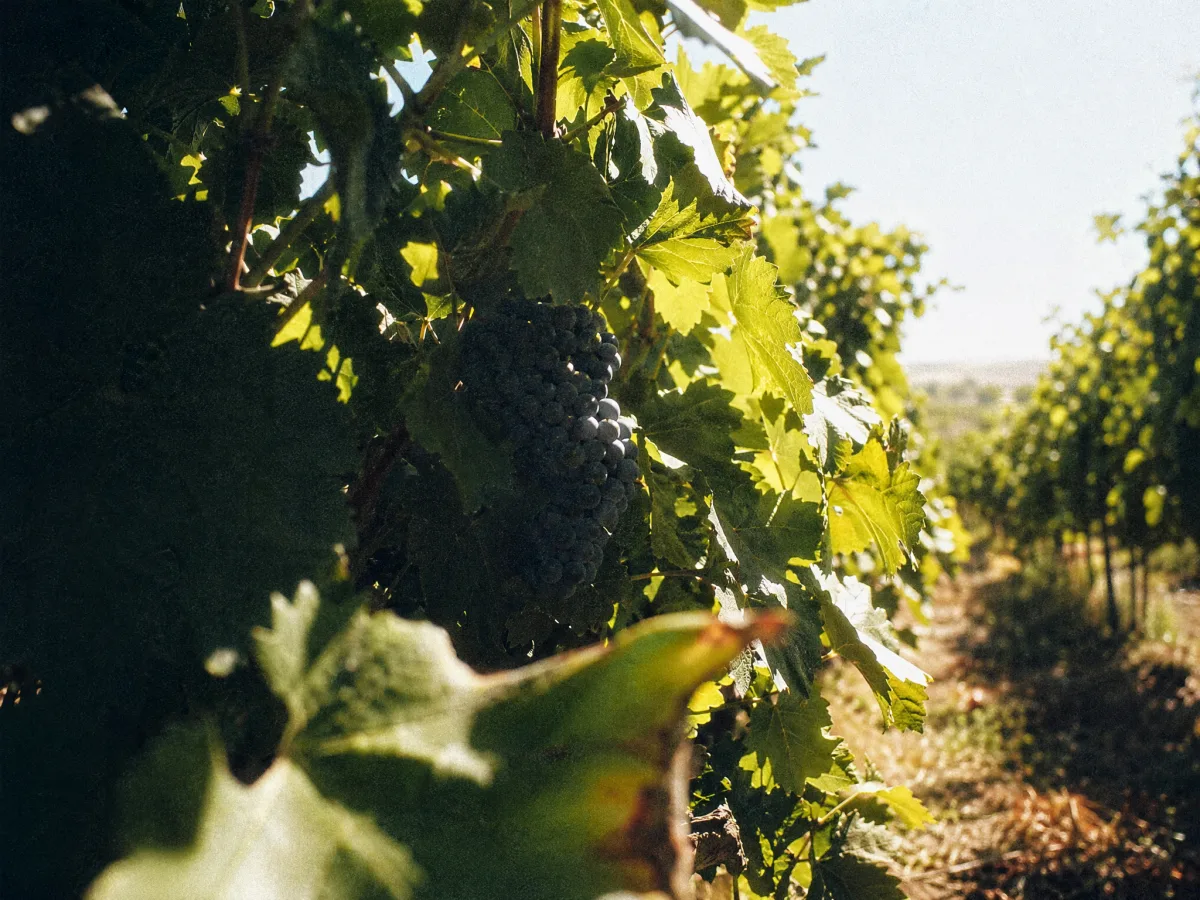
Almost, because the canopy matters. The canopy we have built at Ganchengzi since 2019 is specifically designed for the forty‑degree day. Our leaf wall is taller than most in Ningxia — about 1.4 metres — because we want shade on the bunches from ten in the morning to four in the afternoon. We train the shoots to lean slightly east of vertical, which means the morning sun hits the fruiting zone briefly, gently, and the afternoon sun never does. We leaf‑thin by hand, twice in June, removing only the leaves on the east‑facing side of the canopy. This sounds obsessive. It is obsessive. It is also, as far as we can tell, the only piece of vineyard management that reliably matters in a year like this one.
On the twelfth we spent the day in the cellar. By seven in the evening the temperature had dropped to thirty‑two, the vines had opened their stomata, and the block was, visibly, waking up. We walked the rows at sundown. The fruiting zones were dappled with late gold light and the skins looked taut — slightly stressed, but not burned. That is what we are aiming for. A little stress builds colour and thickness. A lot of stress burns the fruit.
The second forty‑degree day arrived on the fifteenth. The third on the eighteenth. It is going to be that kind of July. We will spend a lot of it not in the rows. The canopy will do the work.
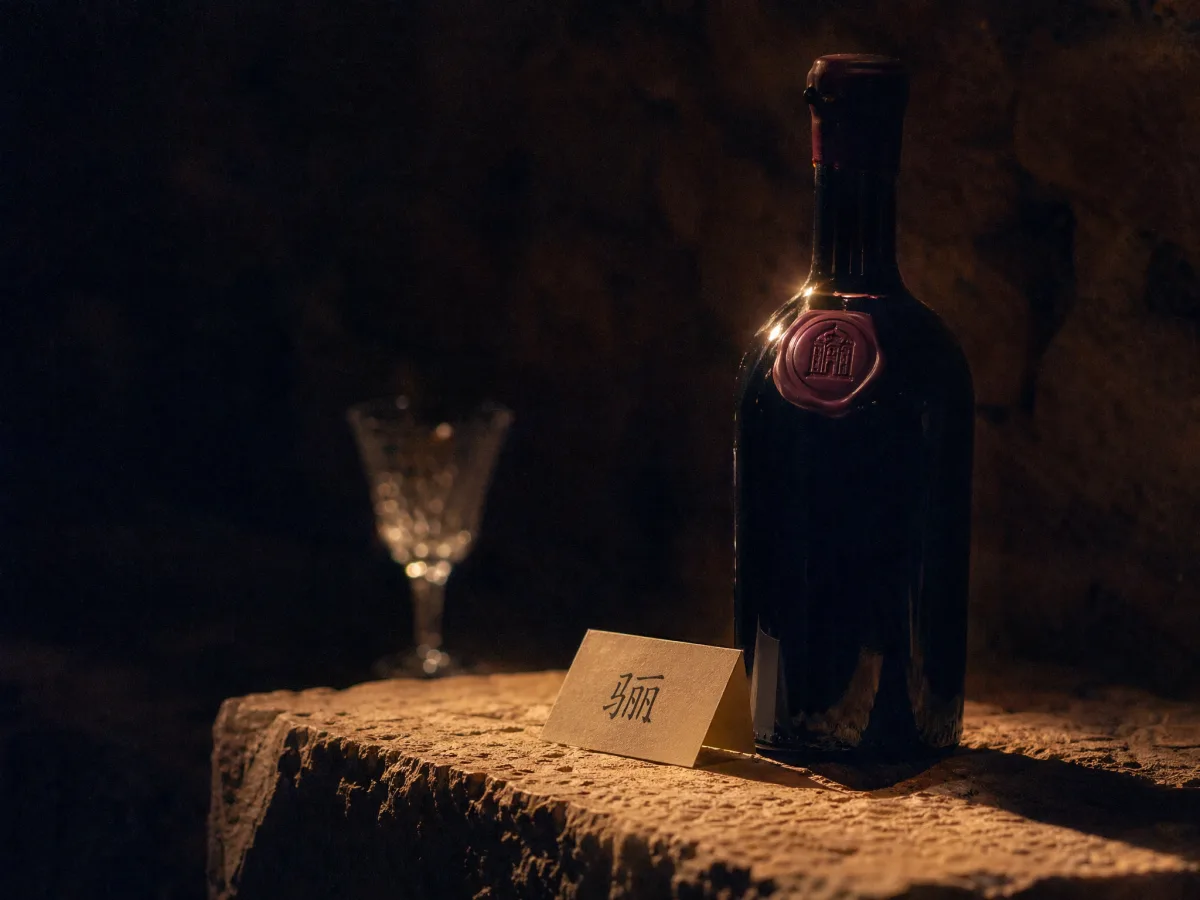
The Lilu 骊麓 is 1,200 bottles a year from the oldest marselan rows at Ganchengzi. It is priced, at the cellar door, at roughly three times our Cabernet. Over a second glass of it, usually late in an evening, we are asked — respectfully, but pointedly — whether that price is really necessary. The honest answer is that cost is not the first reason, and we would be embarrassed to pretend otherwise.
Cost is there. Old vines yield less per hectare, the hand‑picking and double‑sorting for a 1,200‑bottle run is not efficient, and the barrels for Lilu are new French and new American every vintage rather than seasoned. Our accountant could produce a spreadsheet that justifies the price on inputs alone. We do not find that spreadsheet very interesting.
Here is what we find interesting. Three decisions we could make to lower the price are decisions we have chosen, deliberately, not to make.
We could raise the yield. The old marselan block is pruned to four buds per cane. Most flagship marselan in Ningxia is pruned to six or eight. Four buds gives us less fruit, more concentration, and a longer ripening curve. At six we would have 1,800 bottles and a different wine. We would rather have 1,200 bottles of this wine.
We could use a shorter élevage. Eighteen months in new oak is expensive — barrels, space, and the capital that sits in a cellar not earning anything for a year and a half. A twelve‑month élevage would save us roughly eighteen percent per bottle. It would also produce a flagship wine that drinks younger, tighter, and with less of the quiet integration that makes the Lilu sit still in the glass. We are not interested in making that wine.
We could make more of it. Our old marselan block is 1.4 hectares. We own another 2.3 hectares that we have left as younger vines, precisely so that the flagship remains small and honest. A bigger Lilu, made from a bigger block with a wider range of vine ages, would be a different product — a good one, probably — but it would not be the bottle the house was built around.
So the price, in the end, is the number at which we can keep making this specific wine in this specific way without cutting any of the three corners above. It is not designed to signal luxury. It is designed to be honest about the trade‑off.
We sell fewer bottles than we could at a lower price. We meet more of the people who buy them. We refuse some offers from buyers who want a volume that would force us to change the wine. That is the market we have chosen, and we would rather defend it than grow out of it.
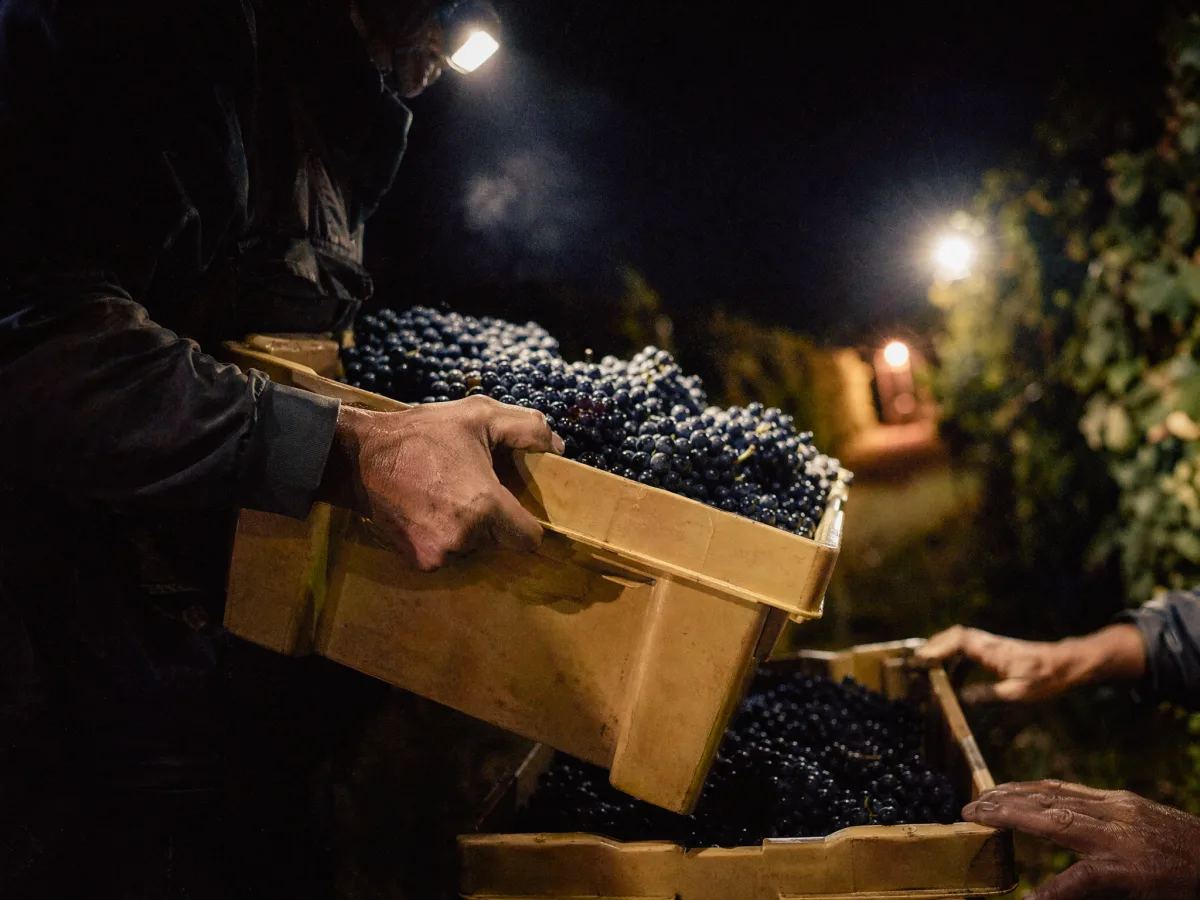
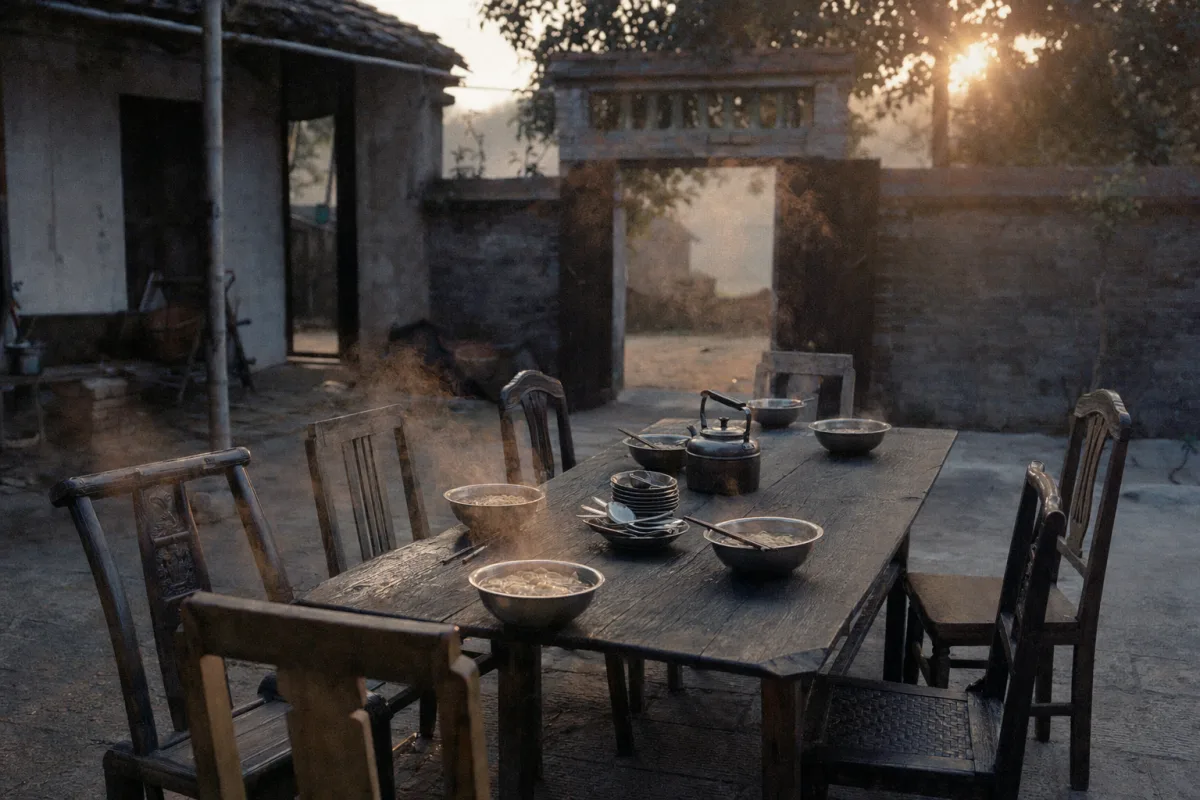
We picked the 2026 Cabernet on the night of the fourteenth of September, starting at ten p.m. By midnight the fruit was in the hopper at eleven degrees. By three a.m. the last crate was weighed. At four we were eating noodles in the courtyard in near‑silence, because the bad weather that had been forecast for the fifteenth had not arrived, and nobody was quite prepared to celebrate until the sun was up and we could see for certain.
This is the seventh vintage we have picked at night. The rhythm of the pick — we start the third row from the south, work west, leave the gatehouse row for last, rotate crates on a two‑minute clock — is exactly the rhythm we worked out in 2020, adjusted only once, for the 2023 vintage when we moved the rotation up to ninety seconds because the weather that week was unusually warm for a night pick.
The crews are not exactly the same. In 2020 the eight families were all in their forties and fifties. In 2026 two of the original pickers have stepped back — one knee, one back, both inevitable — and sent their daughters in their place. Wei Xiaomei, who is twenty‑six and very good, picked her first full cabernet row this year. Her father stood at the end of the row and watched, and when she finished he said, in the quietest voice we have ever heard him use, that her hands were better than his. This is how a vineyard passes from one generation to the next, and we felt lucky to be there for it.
A few things have changed technically. The headlamps are LED now, rather than halogen. The crates have been standardised at twelve kilos each, rather than the mixed crates we used for the first four years. We have added a second folding weigh‑station so we can weigh two rows in parallel. None of these is important. The night is still the same night.
What the night buys us is temperature. Grapes picked at eleven degrees go into the hopper at eleven degrees. Native yeasts, which is what we use, do not begin serious work until eighteen or twenty. That gives us a four‑hour window to destem, sort, and transfer the fruit to the tank before anything begins fermenting on its own. It is a small window, but it is the only way we have found to control a native‑yeast ferment at our scale without cultured yeast or added sulphur in the hopper.
The shiraz comes in on the twenty‑eighth. The marselan last, between the third and the sixth of October. After that the courtyard breakfast ritual we started in 2020 will run for another two weeks, and then the cellar will take over for the winter. The vineyard will be buried by the twelfth of November. None of this is new. All of it still surprises us.
The question arrives, on average, every twelve days. Sometimes it is a customer who has tasted the wine at a restaurant and wants to buy a case. Sometimes it is a consultant who tells us we are leaving money on the table. Occasionally it is a web developer offering to build us a Shopify store for a reasonable monthly fee. The question is always the same and so is our answer. We do not have an online shop, we are not planning to have an online shop, and we think the reason is interesting enough to write about once.
The practical reason first. Wine does not ship well across China. The distances are long, the temperature ranges are brutal, the breakage rate on courier networks is meaningfully higher than on wine‑specialist transport, and the return logistics when something goes wrong are — let us be direct — a nightmare. In 2022, for three months, we did run a small online pilot through the cellar‑door mailing list. We shipped about four hundred bottles. Seventeen arrived broken. Three arrived at the wrong address. Two customers told us, politely, that the wine tasted tired — and given what their delivery history must have looked like, they were probably right. We absorbed the cost, apologised, and stopped. The pilot taught us that a small house cannot run a good online shop without a logistics partner we trust, and at our volume we cannot afford one.
The philosophical reason is more interesting, and probably more honest. When a customer walks into our cellar door, or writes to us directly, or orders through one of the restaurants we work with, there is a person on each end of the transaction. We answer the email ourselves. We know — by name, and often by family — most of the people who have bought a case of the Lilu. When the wine is drunk, we hear about it. Sometimes we hear about it three months later, in a letter. Sometimes we hear about it when a new customer mentions that a friend told them to write.
An online shop removes this. It is frictionless, and frictionless is exactly the wrong adjective for what we are trying to do. We would rather make it slightly harder to buy our wine, and know who is drinking it, than make it effortless, and stop knowing. The slow path — the cellar‑door list, the direct email, the twenty‑three restaurants we work with — gives us information that no analytics dashboard could replace. It tells us what people open the wine for, how it ages in their cellars, what meal they remember it with.
So if you have written to us and been told to send an email to hello@wildhorse.cn, please take the reply as the friendliest possible inconvenience. We will write back within two days. The wine will be sent from the cellar. We will remember who you are.
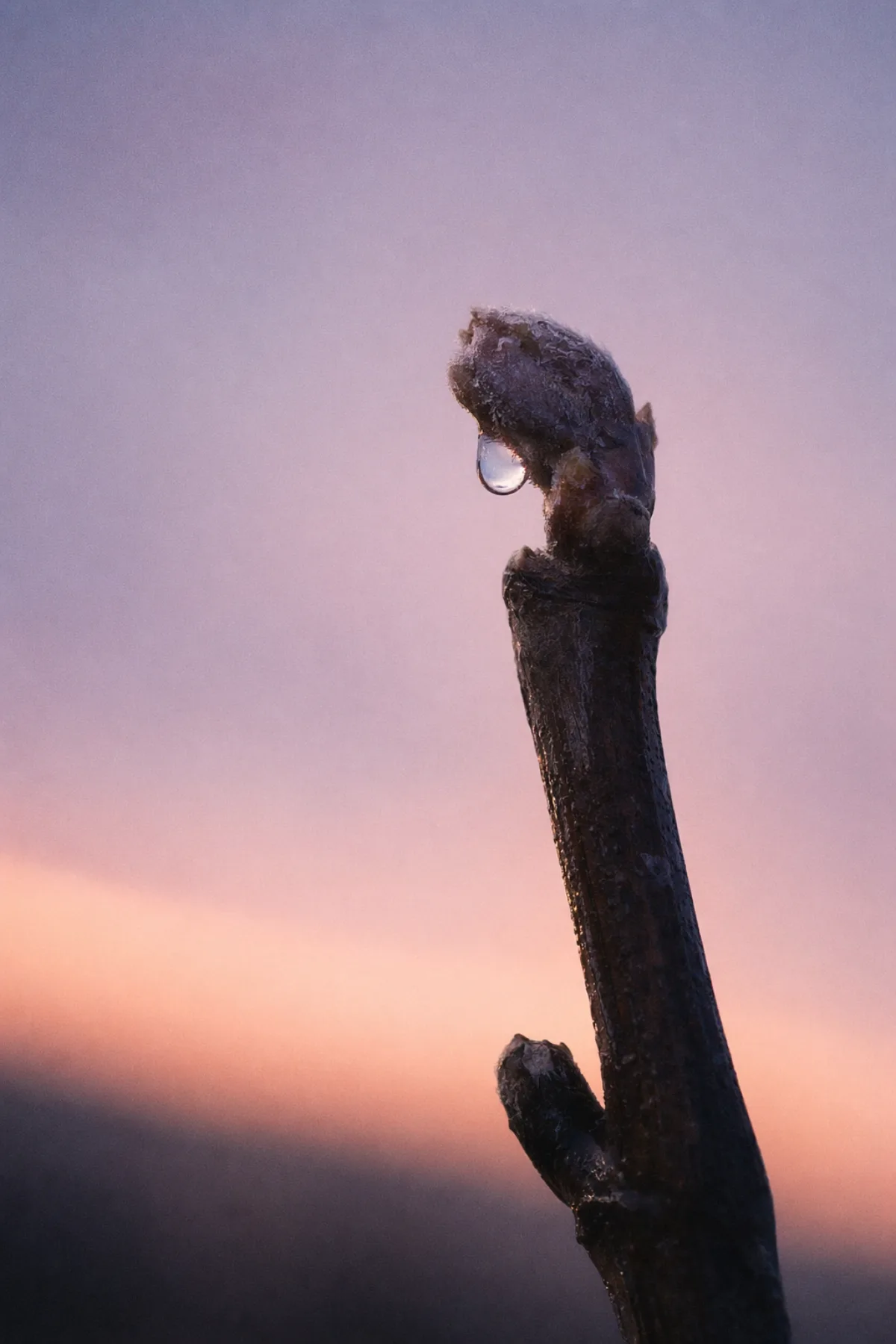
We have been waiting fifteen years to say this and mean it: a cold March is the best news a marselan can hear.
Ganchengzi in a normal March is already cool. This March was colder than cool. Nights down to minus eight, frost sitting in the rows at first light, the kind of still cold that makes the crows wait until the sun is properly up before they start complaining. Our neighbors were worried. We were — quietly, privately, greedily — relieved.
Marselan is a slow grape. It is also, at its best, a grape that listens. When spring moves too quickly, marselan answers in sugar — big, round, brassy fruit that bullies its own acidity. When spring moves slowly, marselan answers in shape. The aromatics come in layers. The skins set their tannins with the patience of a cook who has decided the stock will be ready when it is ready.
What a cold March actually buys us is time. Bud‑break slides by about nine days. Flowering will likely push into late May. And because every later milestone lands in a cooler window, the grapes spend more of their developing life below the temperatures at which aromatic compounds burn off. You can taste that in a glass even three years later. It reads as a kind of quietness in the wine — an unwillingness to shout.
We will not know what we have until September. That is the rule here, and we try to keep it. But the shape of April is looking patient, the soil is holding its water for once, and the marselan block is exactly where we hoped it would be in the seventh day of the seventh week.
So the honest news from the barn this week is that the winemaker is, for the first time in a long time, not checking the forecast more than twice a day.
The 2022 has been stubborn. From the day it went into bottle it has been the kind of wine that stands at the back of the room with its arms crossed. Plenty to say, unwilling to say it. We have opened roughly one bottle every six months — an old habit, taught to us by the person who taught us most of our cellar habits — and every time the answer has been the same: give it more time.
Last Wednesday, for the first time, the answer changed.
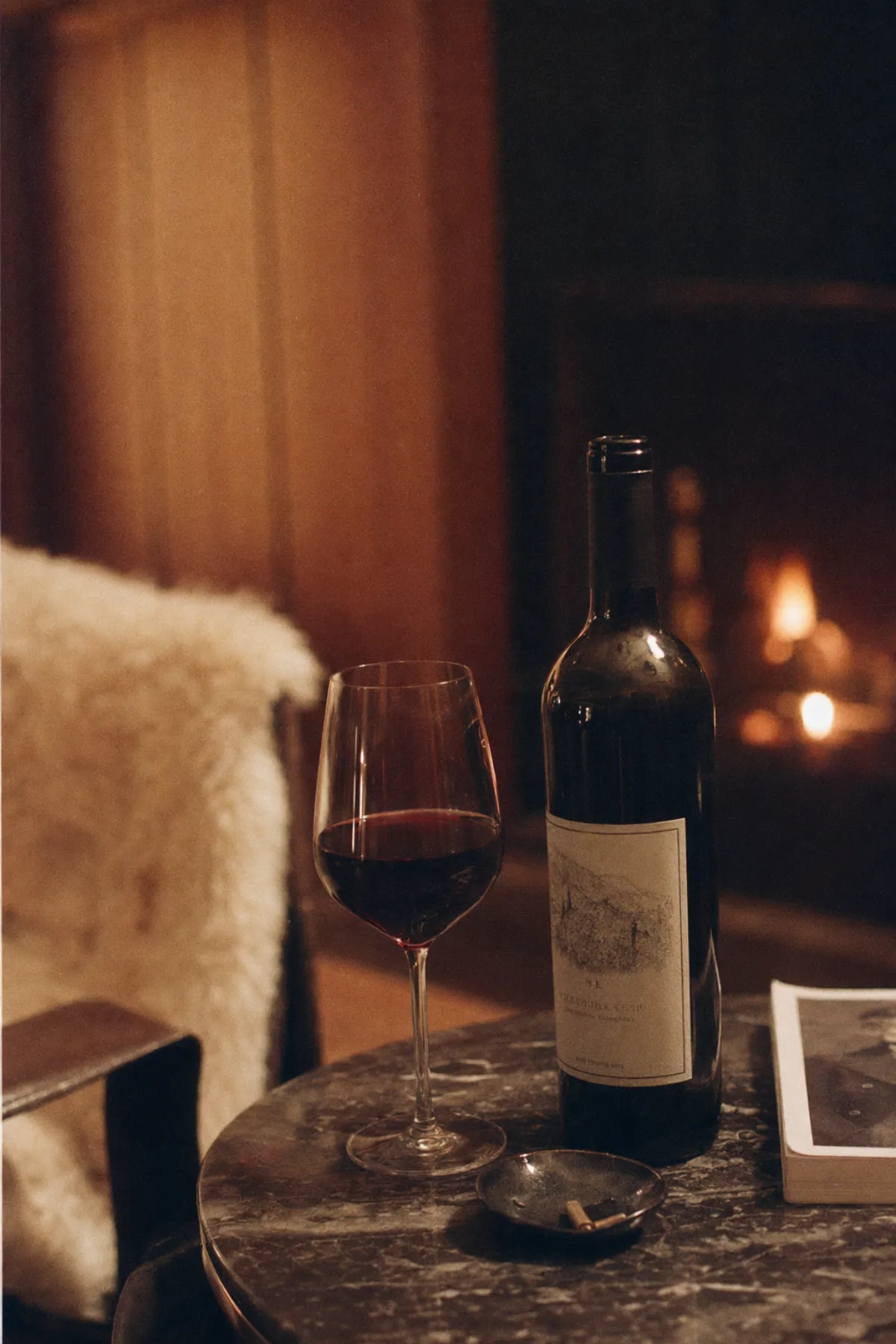
We pulled the bottle at four in the afternoon, decanted for an hour, and sat down with it in the old tasting room upstairs. The first nose was cedar and blackcurrant, tight and upright. By the second pour something began to move. The fruit lifted. The cedar receded. There was suddenly a thread of wet stone in the middle, which is a sensation we have always associated with the oldest Ganchengzi gravel and which we did not expect to find in a three‑year‑old wine.
The tannins are still there. This will not be a wine for people in a hurry. But the texture is no longer gripping — it is carrying, which is a different verb. The finish is longer than it was six months ago by what felt like a third.
We have around 900 bottles of the 2022 cabernet left. We will not be pushing them out of the cellar. The wine is, we think, at the beginning of its second act, and the first act took three years. If the second act is honest to the first, the wine will be worth opening slowly for another five.
One small note for anyone who has a bottle: stand it up for a full day before you draw the cork. The sediment is fine and stubborn and refuses to settle if you are in a hurry.
Our cellar door will open for its twelfth season on the first Saturday of April.
A short note on how we run these. We take ten people per tasting. Not eleven, not twelve. Ten is the number at which the room still feels like a room, and past which it starts feeling like a tour. The tasting runs about ninety minutes. We pour four wines in order of weight, not in order of release, and we serve the marselan last. There is a reason for this: the marselan opens a conversation that is hard to follow with anything louder. If you come in expecting the flagship Lilu to close the tasting, know that we saved it for the end on purpose.
We ask every guest to book in advance. This is not precious — it is logistical. The cellar sits in a working vineyard and there are days when we are honestly too busy with a tank to be good hosts, and we would rather tell you that in the week before you arrive than make you drive three hours and find us in rubber boots.
Tastings are free for people who have bought from us before. For first‑time visitors it is eighty yuan per person, which goes directly to the small kitchen that feeds the eight families who work the vineyard. If you have trouble with the booking form, write to us directly — hello@wildhorse.cn — and we will answer within two days.
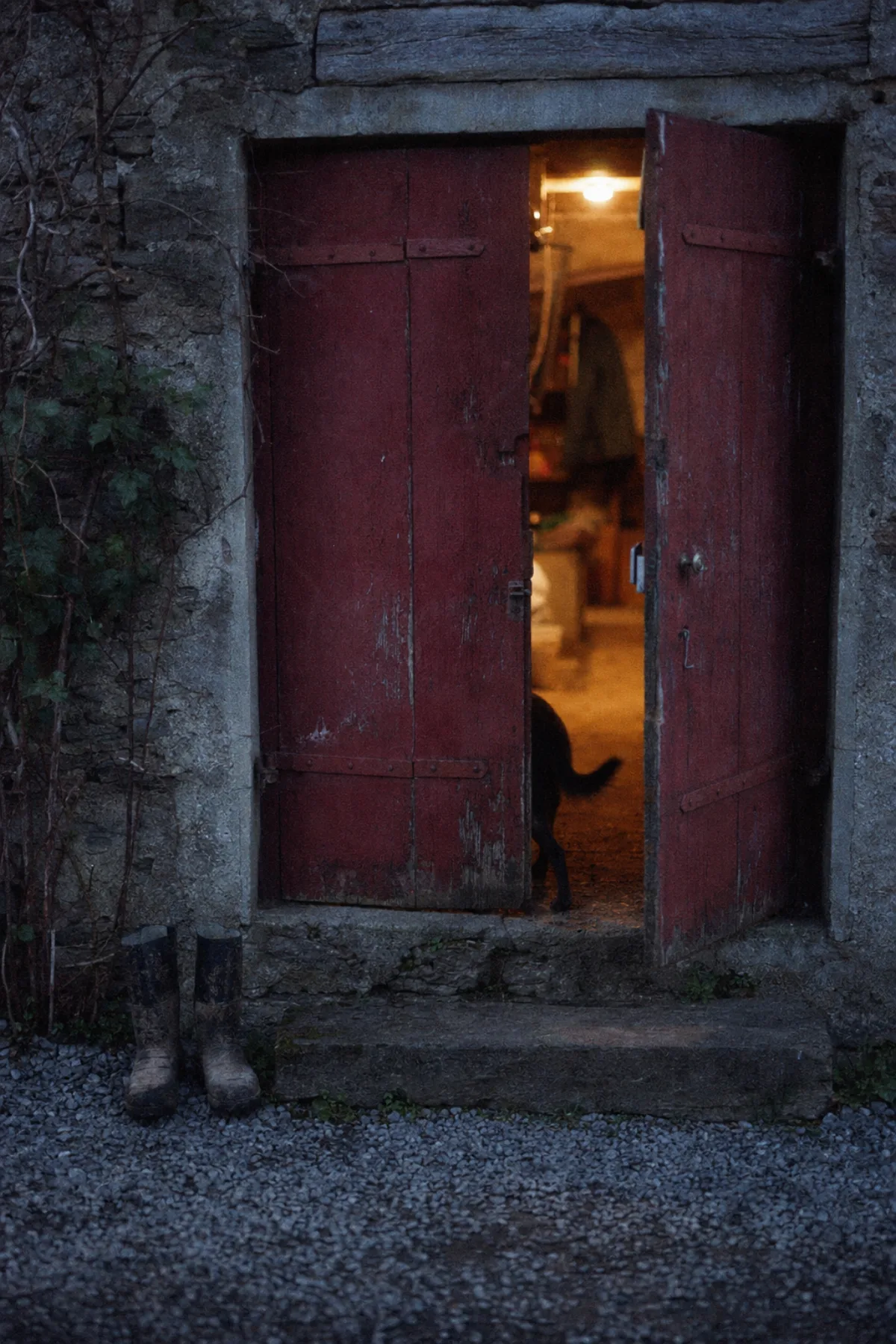
A last note, because we get asked every year: yes, there are dogs on the property. Three of them. They are exceptional ambassadors and terrible at staying out of photos.
See you in April.
Winter burial is the most misunderstood thing we do here.
People who have visited the Helan slopes before us will sometimes ask, politely, if it is really necessary. The question is usually asked in the voice of someone who has read that Chile and Argentina manage without it. The honest answer is: yes, and it is the single practice that most defines what it means to grow wine in Ningxia.
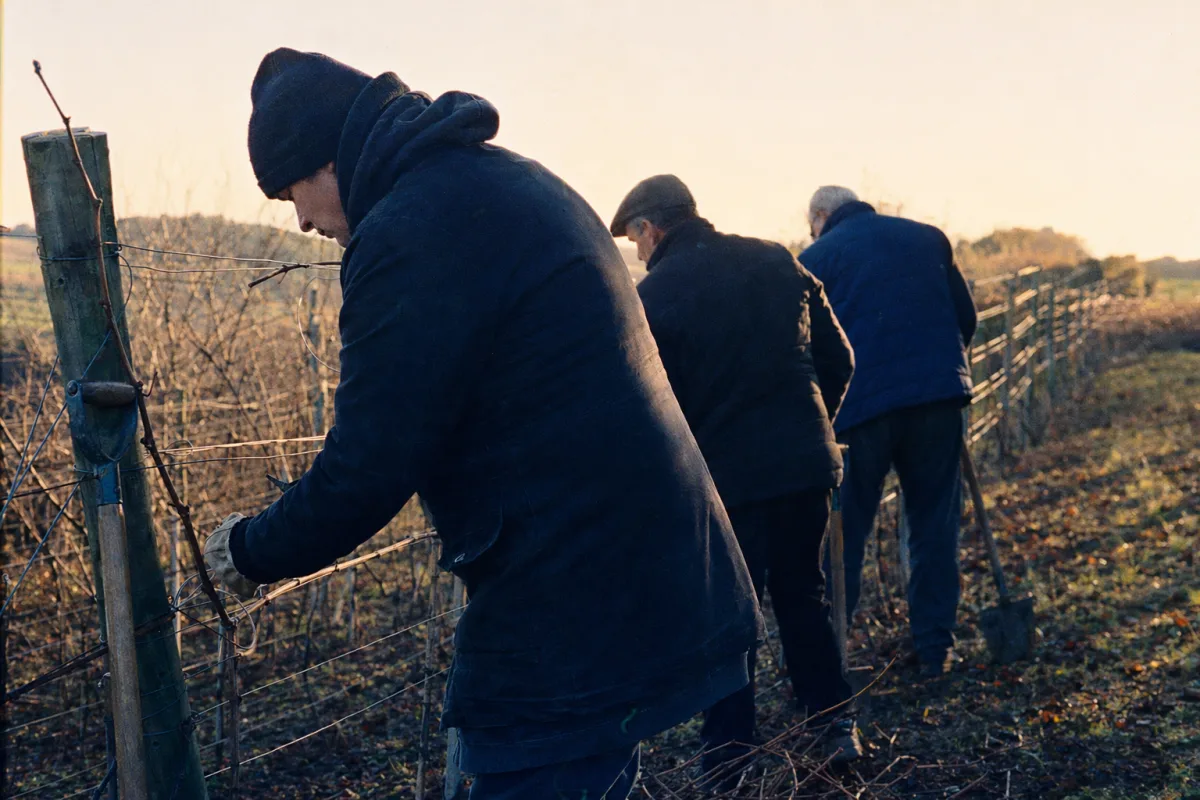
When the first hard frost lands — usually in the second week of November, though it has been as late as the twenty‑first — we walk the rows with the eight families and decide, block by block, whether the canes are ready to come down. The canes are flexible, just barely. We bend them over, pin them to the ground with a length of wire in the shape of a hook, and then we bury them in a ridge of soil about forty centimeters high. The vines sleep under this blanket for roughly four months. If we do it right, not a single vine dies to the cold. If we do it wrong, even by a week, we lose whole rows.
It takes six days. The eight families have done it together for eleven winters in a row. The three new pruners who joined us this autumn learned the rhythm in three days, which is faster than any of us were expecting, and they taught us one small improvement in the hook‑bending motion that we are now quietly adopting.
The part we do not talk about as often is the un‑burial, which happens in April. It is slower, more fragile, and harder on the back. But the un‑burial is also the moment every year when the vineyard wakes up into shape, and it is the moment we all remember why we stay here. It is not efficient. It is not industrial. It is simply what this piece of land asks of anyone who wants to grow a grape on it.
Twelve winters in. The rhythm is getting quieter.
We picked the 2025 cabernet on the night of the 12th of September, the marselan on the night of the 20th, and the shiraz in two passes on the 25th and the 26th. All of them came in cold, and all of them came in at night — the cabernet under a thin moon, the marselan under no moon at all.
We have been picking at night for six vintages now. The argument for it is simple: the fruit arrives at the cellar at eleven or twelve degrees instead of twenty‑five, which means the natural yeasts do not start their work in the hopper. It means we make the decisions about fermentation, not the heat.
This year the numbers were as clean as we have ever seen. Cabernet came in at 13.2 potential alcohol, pH 3.52. Marselan at 13.8, pH 3.68. Shiraz at 13.6, pH 3.74 — which is higher than we wanted, and which tells a story about the last ten days of September that we will be thinking about for a while.
The shiraz is the surprise. It arrived with the most black pepper aroma we have ever seen come off this block. It is not a fault and it is not unpleasant — it is a style, and it is a style we do not control directly. The syrah grape has a compound called rotundone that builds under certain late‑season cool night conditions, and 2025 gave us exactly those conditions. We are watching this fermentation carefully. If the pepper holds without tipping into green, we will have a wine that tells an unrepeatable story about this specific late summer. If the pepper fades in barrel, we will have a regular beautiful wine. There is no wrong answer. There is only what the wine decides.
The marselan is doing what marselan does after a cool spring: quietly, slowly, without hurry. The cabernet is classical. Both have finished primary fermentation. Both go to barrel next week.
The morning after the last pick we made soup for the pickers at six a.m. in the courtyard. Nobody talked much. The wind was not moving. It was the slowest, best morning we have had in a year.
This is the fourth year in a row that somebody has asked us, politely but with real feeling, whether we are ever going to make a rosé. The honest answer is: not yet. Probably not soon. Possibly never. And because the honest reason is more interesting than the honest answer, here is the reason.
A good rosé is one of the hardest wines in the world to make. It is not a light red and it is not a tinted white — it is its own category, and the growers who make it well treat it as a first wine, not an afterthought. The great rosés of the southern Rhône and the Côtes de Provence come from blocks that were planted, pruned, and picked specifically for rosé. The tannins have to be fine but present. The acidity has to sit in a very specific window. The phenolic ripeness has to arrive before the sugar, which is the opposite of what you want for a red.
At Ganchengzi, our blocks are planted for reds. Deeply planted, with the old rows down at the foot of the gravel where the roots have to work for every drop of water. Those vines do not give up phenolic ripeness easily, which is exactly what we want for a cabernet or a marselan, and exactly the wrong starting point for a rosé.
We could, of course, bleed off a portion of our reds — the saignée method — and bottle the pink as rosé. We have tasted saignée rosés from some of our peers in Ningxia and they are honest wines, and we are not going to pretend otherwise. But a saignée is a by‑product. It exists because the winemaker wanted a more concentrated red. If we are going to put something into a bottle with our name on it, we would rather it be the thing we set out to make — not what fell out of the press while we were making something else.
So: no rosé. Not until we plant a block specifically for rosé, which is not in our ten‑year plan and probably not in our twenty‑year plan either. We would rather disappoint three hundred good‑natured customers than release a wine that we do not fully believe in.
Thank you for asking. Thank you, especially, for asking honestly. We hope you will forgive us for answering the same way.
When the cellar was built in 2014, we were young and romantic, and we designed the whole thing around gravity. Fruit came in at the top of the slope, fermentation tanks sat one floor down, barrels another floor below that, bottling at the bottom. Every time the wine moved, it moved downhill, through a wide hose, with no pump.
For three vintages we were very proud of ourselves.
Here is what we did not foresee. Gravity is slow. Wide hoses are slow. And the wine, in the period between tank and barrel, hates being slow. In three of our first four vintages we saw a faint oxidative note creep into the lot in the forty‑five minutes it took to move it by gravity from the fermentation tank to the barrel floor. Not a fault. Nothing a guest would ever detect. But something we could detect, in our own wine, in our own cellar, three months later.
The third vintage we tried everything. We chilled the pipe. We flooded the line with CO₂ before every rack. We went through bottles of sulfur dust. The note kept turning up — subtle, intermittent, maddening. It was the ghost of a few extra minutes of air contact, haunting a wine we had taken six months to grow.
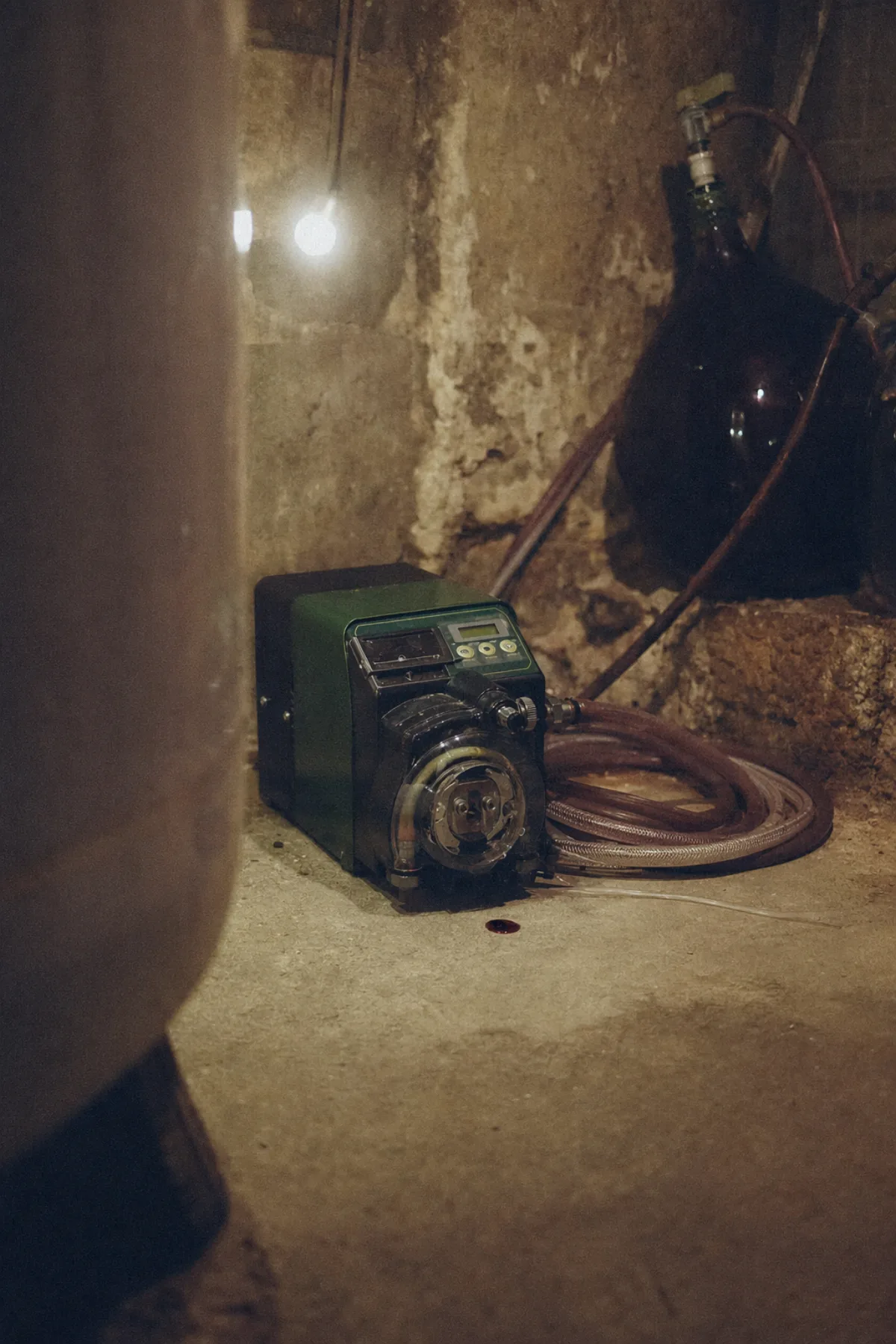
In 2018 we gave up and put in a peristaltic pump. A peristaltic pump moves liquid by squeezing a rubber tube with a rotor, the way your heart does. It is the gentlest mechanical pump we could find, and it is about ten times faster than our old gravity line. The first rack with the pump cut the time down to four minutes. The oxidative ghost has never come back.
We still talk a lot about gravity in this house. It still matters for crushing, for certain élevages, for keeping lees intact. But for moving wine from tank to barrel, we were wrong, and the pump was right, and the only sensible thing to do was to admit it.
The slightly sheepish postscript: the first thing we did when we ordered the pump was to paint it dark green so it would not look too industrial in the cellar. We still paint every new pump dark green. We know. We are making progress, one painting at a time.
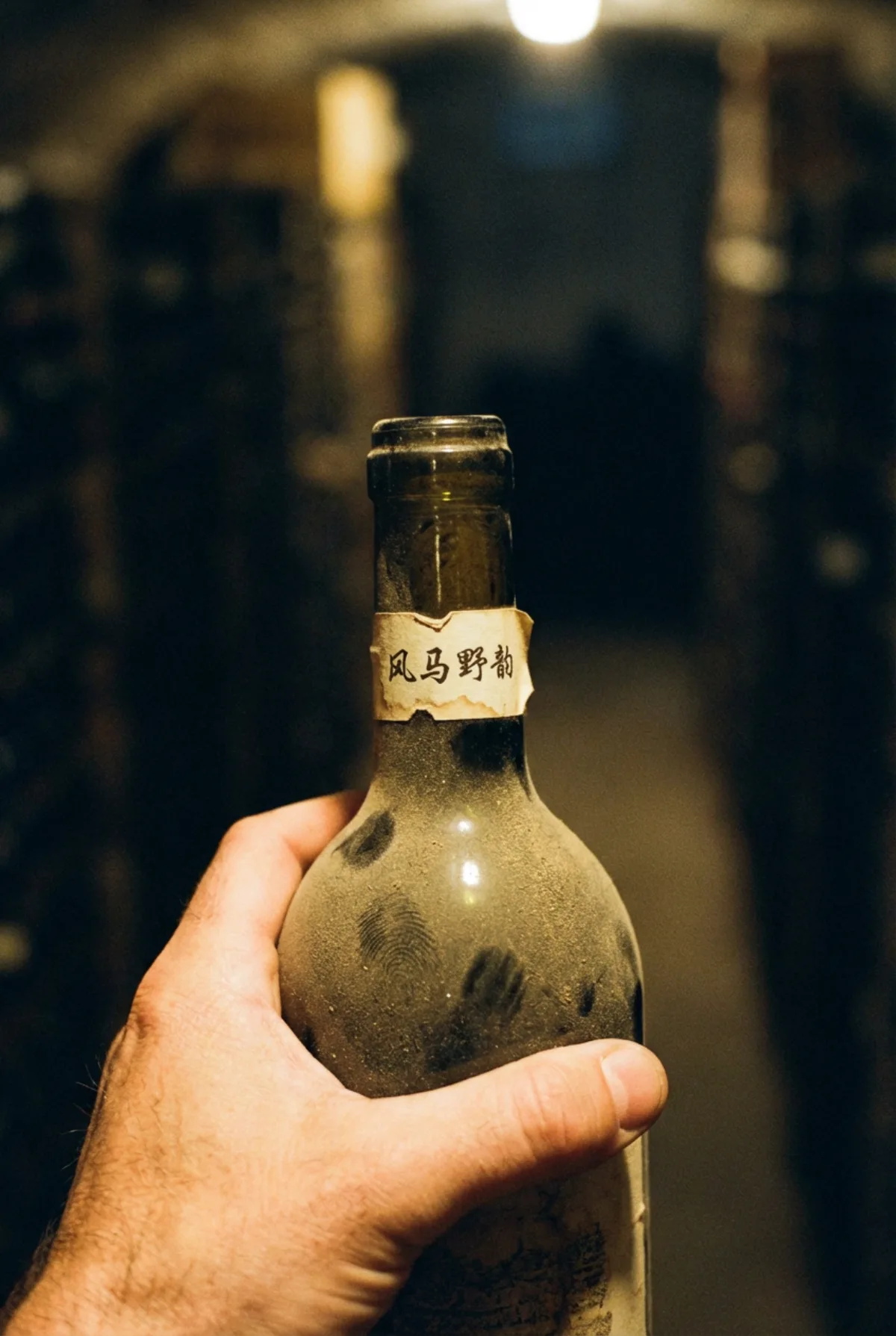
The 2019 is the vintage we do not talk about very much, for the simple reason that we did not sell it.
It was our first full‑scale harvest. The cellar was new. We were new. A hailstorm on the 4th of September reduced the marselan block by nearly half and left the cabernet looking like it had been combed backwards. The wine that we managed to make in October was cleaner than it had any right to be — honestly better than we deserved — but we decided, in the first tasting after malolactic, that we did not want our debut to be a wine made in the shadow of a storm. We bottled it anyway, stored it all in the back room, and never put it into the catalog.
Last Sunday we opened a bottle.
The cork was perfect — dense, elastic, without the beginning of the downward slump that a bad cork starts to show at five years. The wine underneath was garnet, not red, which was the first surprise. The second surprise was the nose, which was still very much a young wine: black fruit, a whisper of tobacco, a little iron. The third surprise, and the one that mattered most, was the palate. The 2019 is holding. The tannins have integrated beautifully. The finish is long and honest and not tired.
This is not us retroactively deciding that we were wrong to hold it back. We still think the wine we made in 2022 was the wine we wanted our name on first, and we still think the 2019 was a fair wine made under unfair weather. But the 2019 is, as of last Sunday, a quiet, unhurried, genuinely lovely wine. We had not expected that.
We are going to open the 2019 in small lots at the cellar door this summer. Not for sale — we do not have enough bottles to sell, and the wine has a story that is worth hearing in person. If you visit between June and September, ask for it by name. We will pour a glass if there is any left.
The stone cellar was the hardest thing we have built on this property, and we built it in winter on purpose.
The idea was simple. We wanted a below‑grade room, half cut into the slope behind the vineyard, that would hold fourteen degrees without refrigeration for ten months of the year. The walls would be local sandstone, dry‑laid for the outer shell and mortared for the inner shell. The roof would be an old vault shape — the kind they still build by hand in some parts of Gansu — and would be finished in compacted earth and a layer of hardy grass. We did not want a climate control unit. We wanted a cellar that held its temperature because of its walls and its position, not because of electricity.
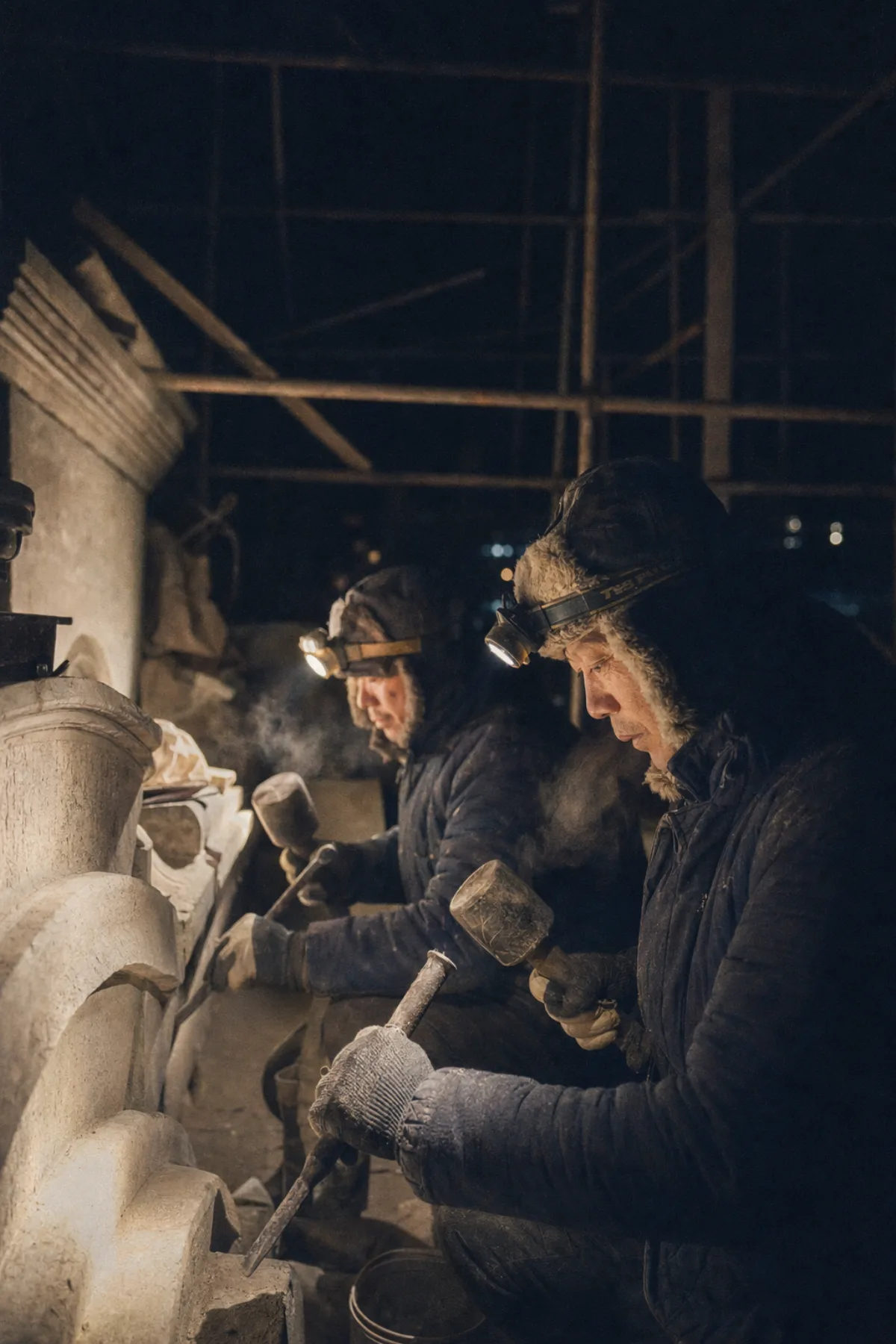
We built it in winter because the stonemasons we wanted were only free in winter — they work olive presses in the south during the long summer — and because the ground at Ganchengzi is more cooperative when it is frozen than when it is thawing.
It took four months, almost to the day. The masons were called Wei Laoshi and Yin Laoshi. We will write about them properly another time, because they deserve a post of their own. For now: they worked six days a week, in temperatures that frequently dropped to minus fifteen, and in the fourth month — when the vault was being closed — they worked by headlamp until nine at night to finish before the first thaw.
The room is now three years old. It holds fourteen degrees on the hottest day of the year. It gains one degree during August. It loses one degree in January. It is the most consistent, least electrical, most honest room we have ever worked in, and the small pleasure of walking down into it after a hot day in the vineyard is one of the reasons we stayed.
We owe everything about that room to two men we met for the first time in the autumn of 2021, on the recommendation of a friend, and who finished a job in four months that we could not have done in a year. If you are ever at the cellar, ask to see it. We will take you down the steps.
A lot of Ningxia marselan is raised in American oak. We do not raise ours in American oak, except in the Lilu cuvée where we use both — and we have been asked enough times why that we owe a proper answer.
The quick version is this: American oak is a generous wood. It releases its aromatic compounds — vanillin, coconut, sweet spice — quickly and loudly. For a young fruit‑forward style, it is often exactly the right choice. The oak becomes part of the wine almost immediately, the flavors mature in a matter of months, and the finished bottle has a kind of warm, familiar roundness that a lot of drinkers have learned to love.
French oak — and more specifically, the tight‑grained oak from the Allier and the Tronçais forests — is a quieter wood. It releases its aromatic compounds slowly, at about a third of the rate, and it leans more toward smoke, graphite, and very fine spice rather than sweet vanilla. It also lets the wine's own aromatics come through more clearly, because the oak is doing less talking.
Our marselan, from the oldest block at Ganchengzi, does not need a loud wood. What it needs is a wood that will let its own quiet signature — plum jam, black cherry, a thread of violet, a whisper of wet gravel — set the shape of the wine. We tried American oak in 2020 and the result was a wine that tasted like a very good American‑oak wine with some marselan in it. In 2021 we switched to a mix of French and American. In 2022 we went to one hundred percent new French oak from three specific coopers in Burgundy, at a medium‑plus toast. The wine finally tasted like itself.
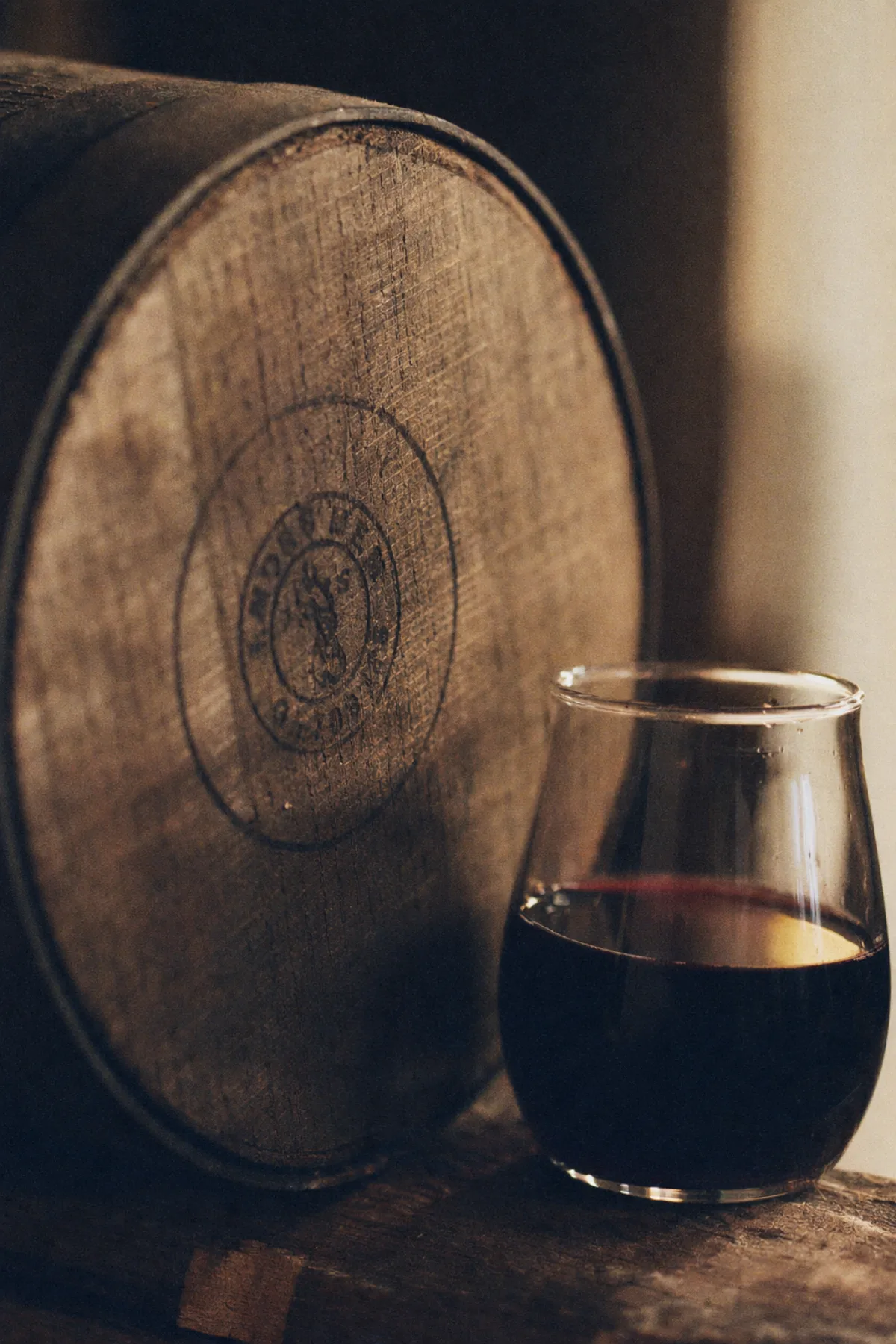
The exception is Lilu. Lilu is made from our very oldest marselan vines, and the old vines carry enough fruit to hold up to both woods. We age Lilu for eighteen months in 300L new French and American oak in equal parts. The result is a wine that has both the quiet and the warmth — the quiet from the French wood, the warmth from the American. It is the only cuvée in the house that sees both, and it is the cuvée we built the whole property to eventually produce.
For everything else: French oak. Medium‑plus toast. Three coopers. Eighteen months. One grape that has taught us, slowly, how it wants to be heard.