Half desert, half river, all wind. The grapes come second — the place comes first, and we never let ourselves forget it.
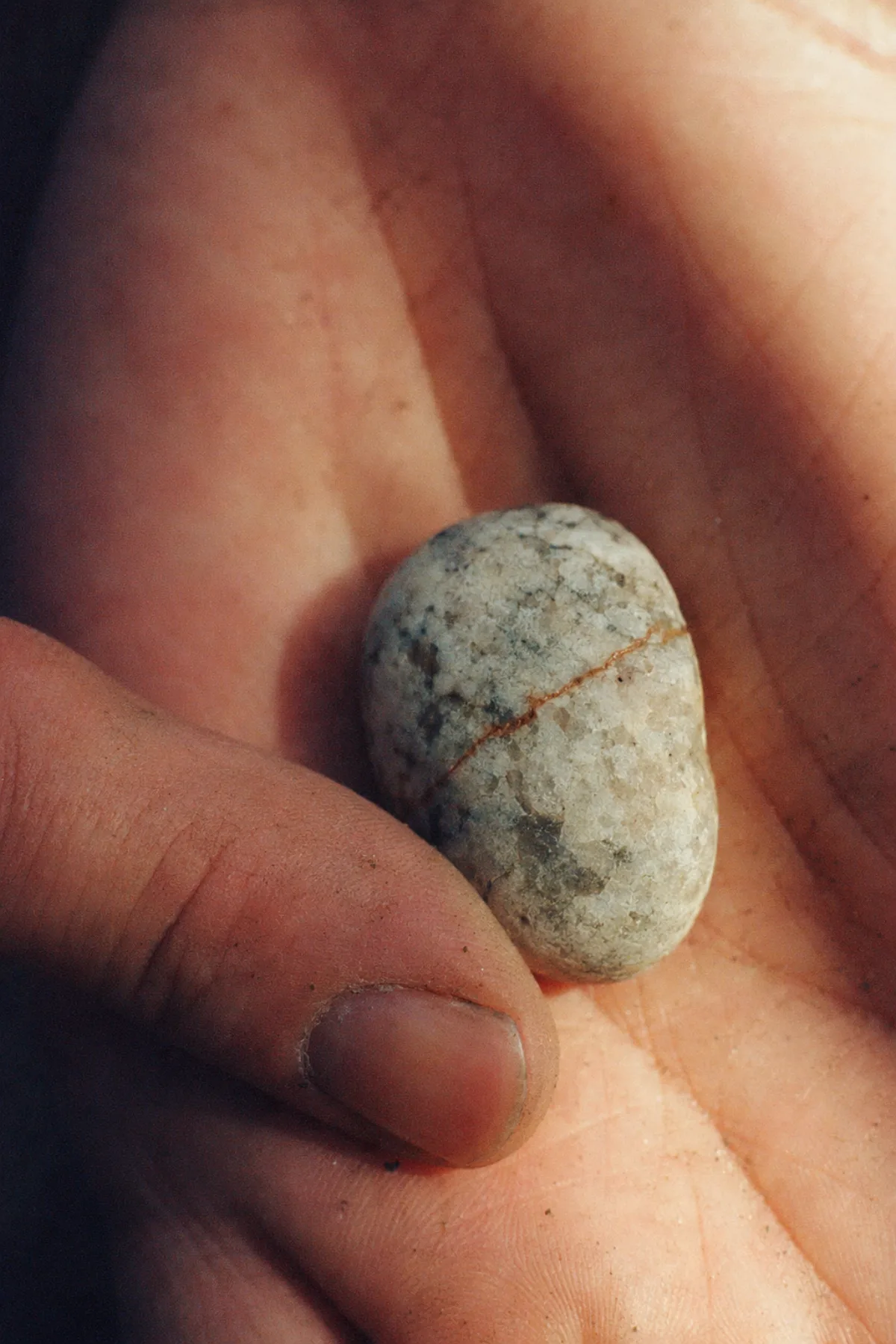
Twenty thousand years ago the Helan range was a wall against the wind. The wind, refusing the wall, dropped its stones at the bottom and built our vineyard.
A river was added later. A handful of vines, much later still. We are only the third draft.
Numbers are not the wine. But they tell you why the wine wants to behave the way it does.
Almost the same parallel as Sonoma, Tuscany, and the southern Rhône — but at three times the altitude.
High enough to drop the night temperature by 25°C in summer. Skins thicken, aromatics lock in, acidity stays bright.
Alluvial fan from the Helan range. Sharp drainage, low fertility, generous mineral signature. The vine has to dig.
Among the highest in any wine region in the world. Long, dry, and absolutely linear.
Less than a quarter of Bordeaux. Almost everything we get falls between June and August, exactly when the vine wants it.
The reason our cabernet smells like cabernet, and our marselan smells like marselan, even after 18 months in French oak. Cool nights protect the perfume.
Every season at Ganchengzi has a posture. We try to match ours to the vine's.
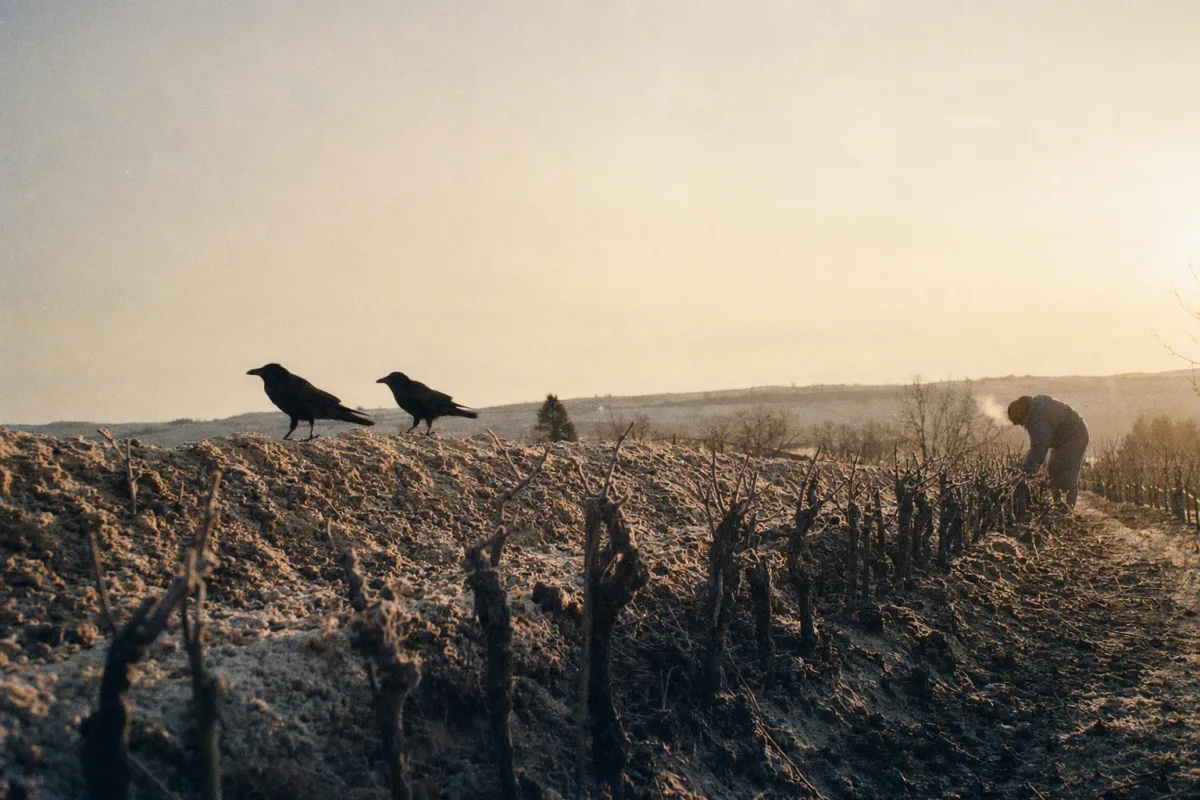
Ningxia winters are violent. Each vine is buried under 30 cm of soil for protection, then unearthed only after the last frost. The pruning is done by the same eight families, every year, in the same order.

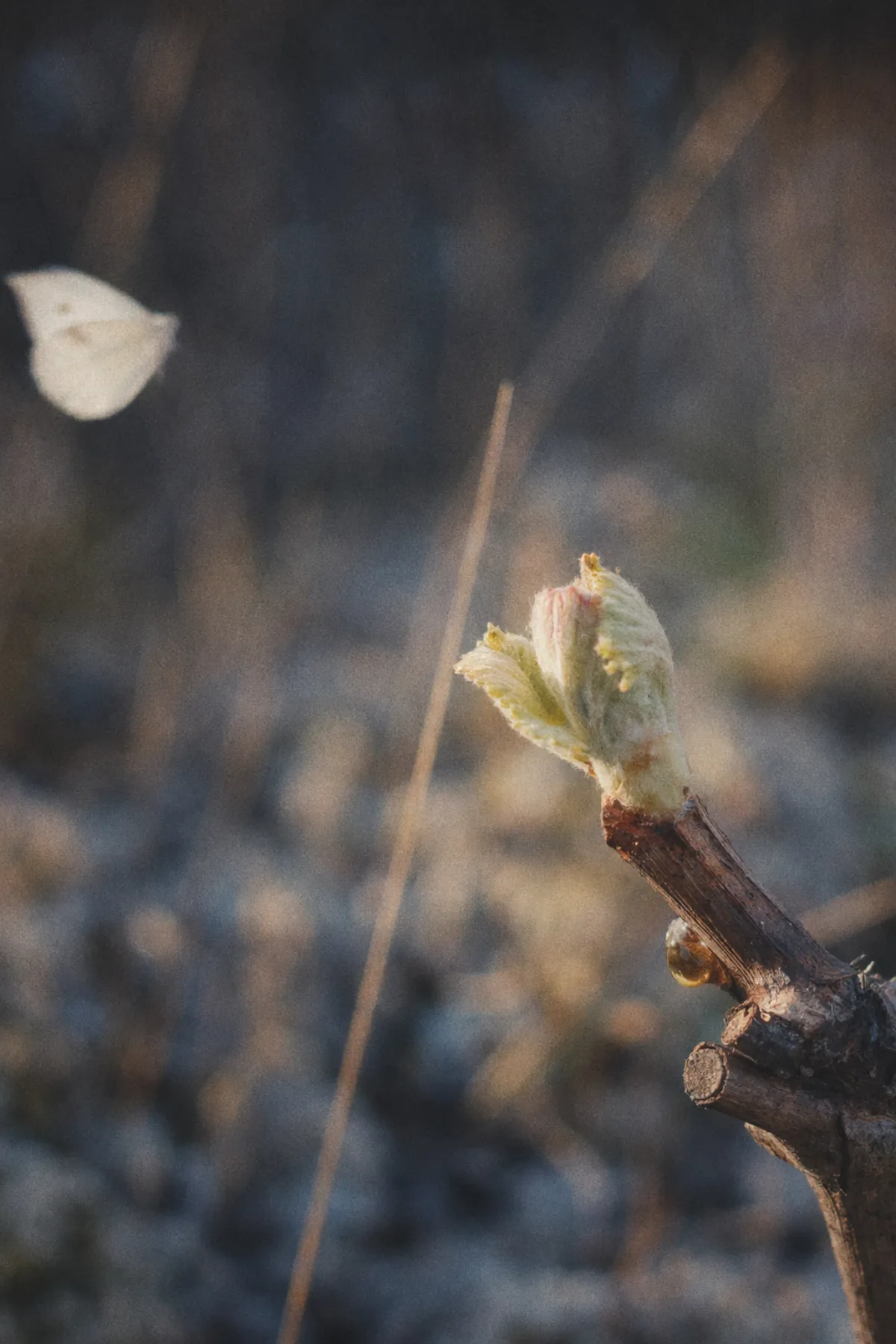
The mountain wind picks up. The buds break late, and slowly. We do nothing — there is nothing useful to do.

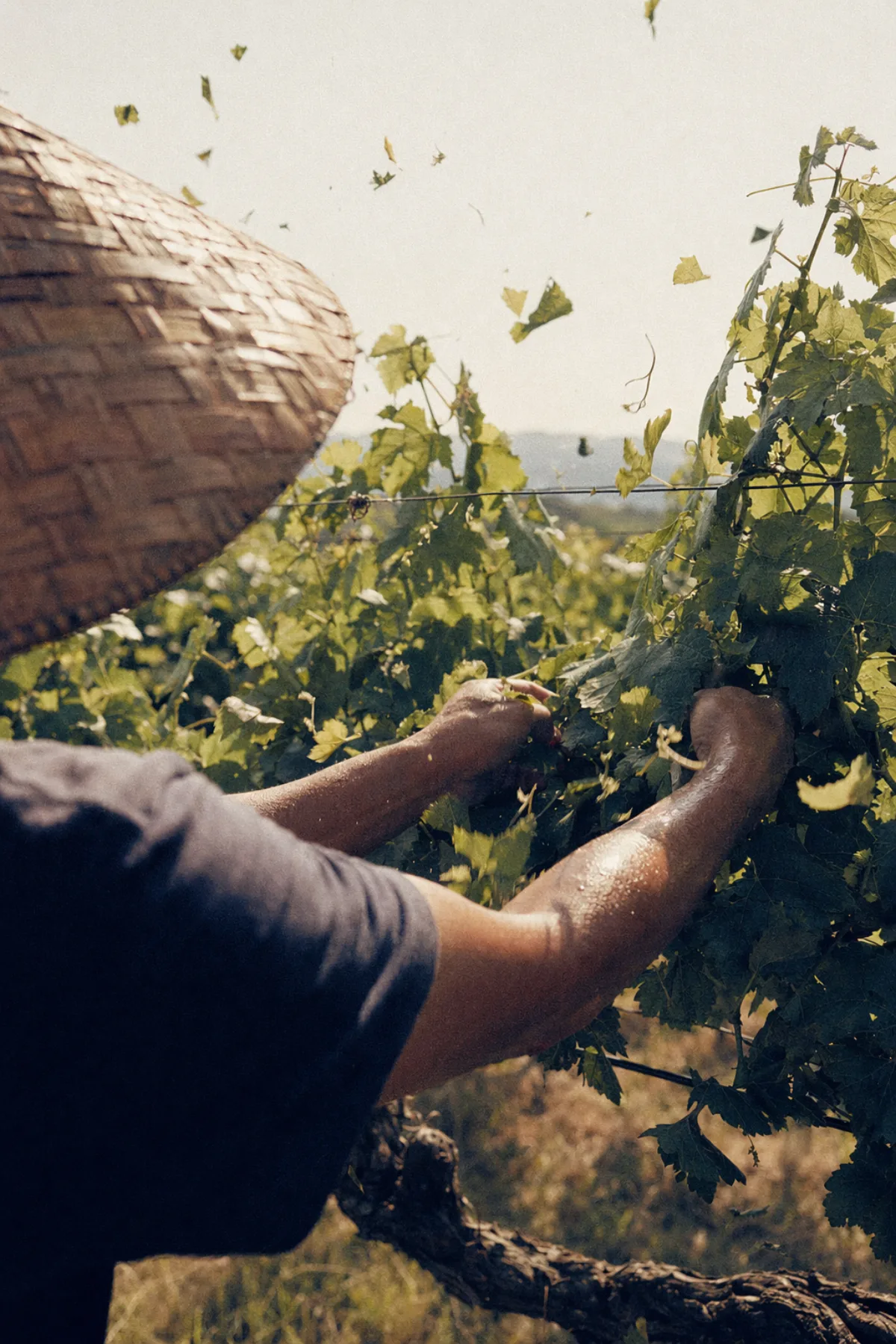
40°C days arrive almost overnight. We thin the canopy by hand, leaf by leaf, to keep the bunches in shade.

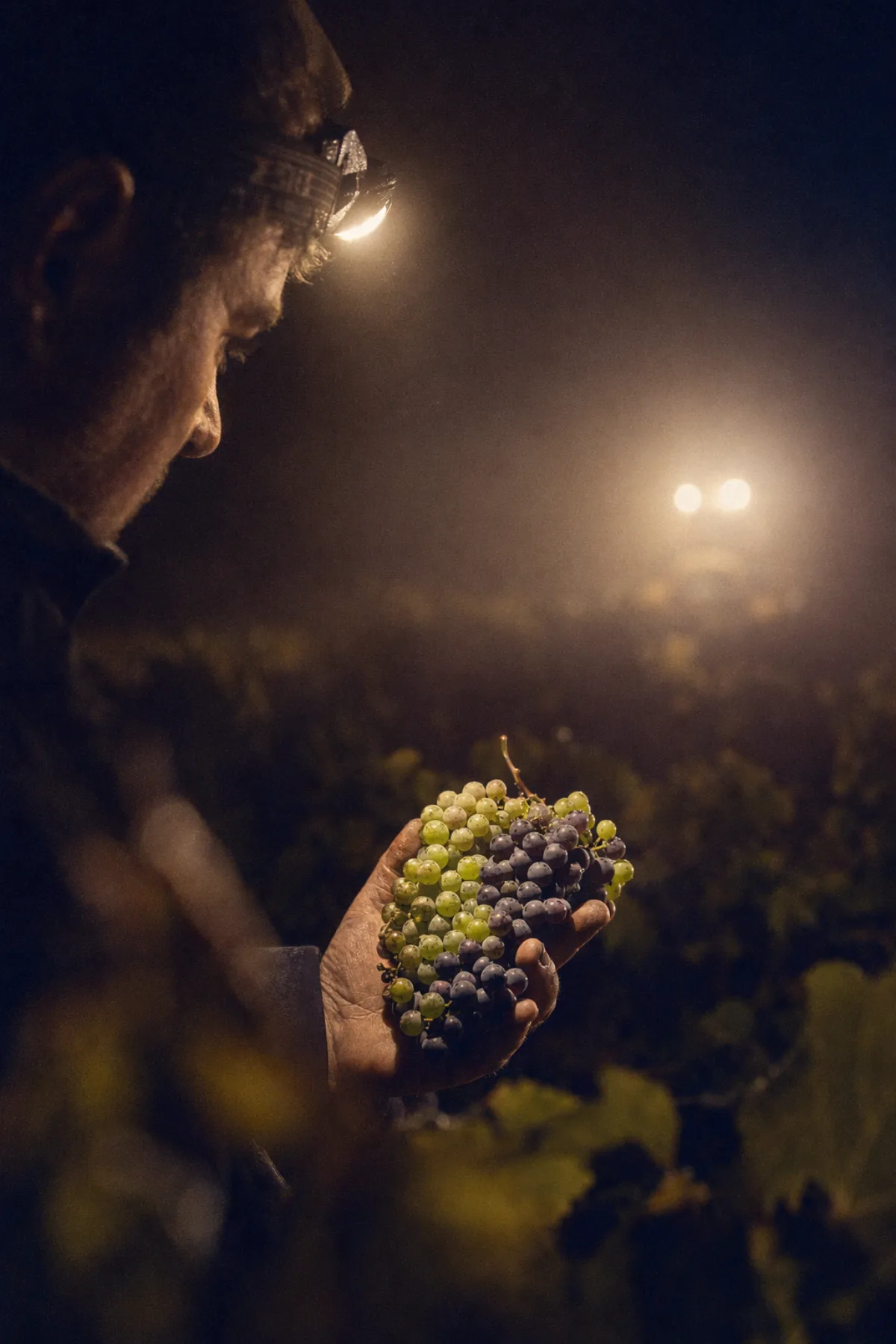
Colour changes. The grapes finally begin to taste like themselves. The harvest is done at night for ten days, between the second and third week of September, to keep the fruit cold.

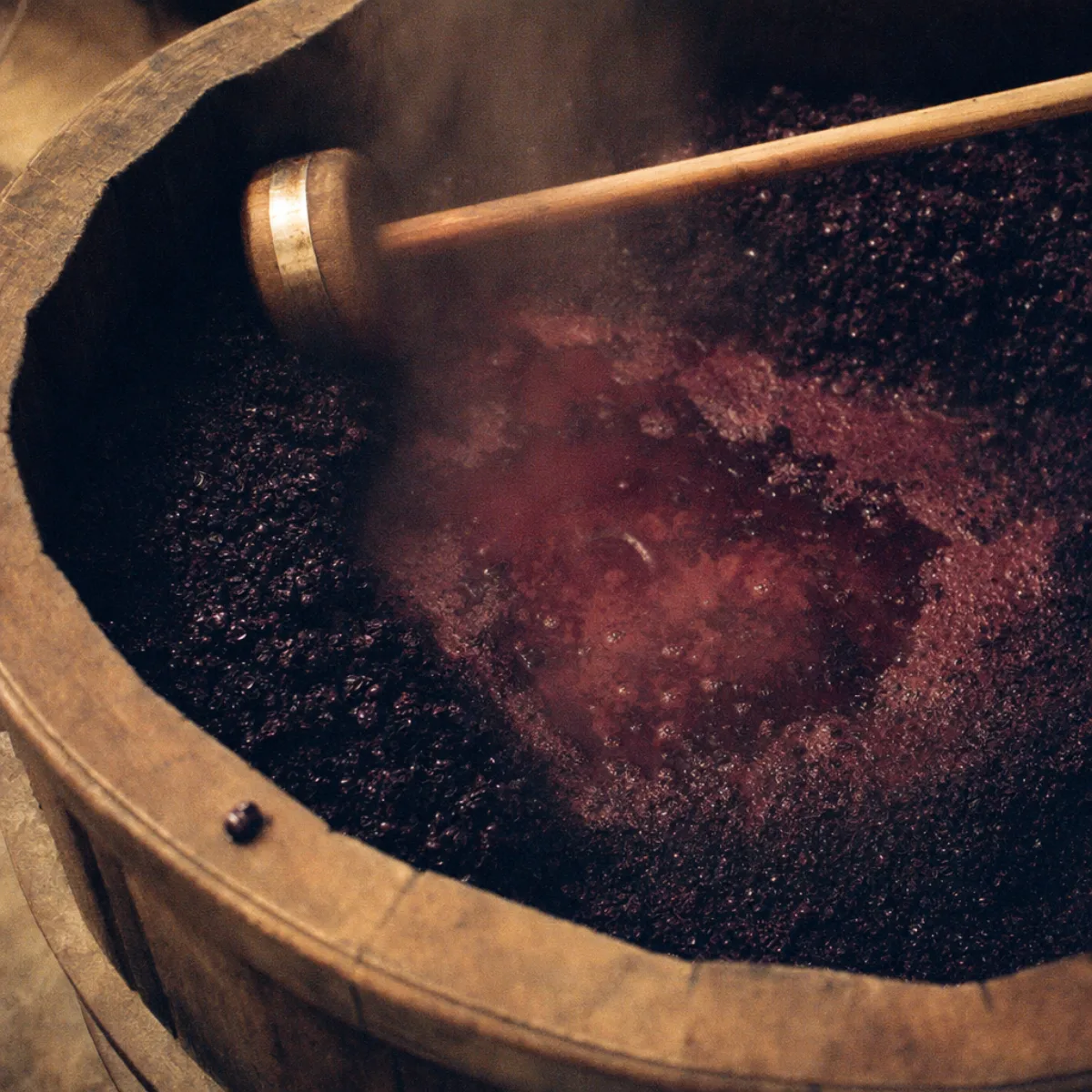
Open vats in the cellar. Native yeasts. Punch‑down by hand twice a day. By December, the wine is in barrel and the vineyard is buried again, waiting for January.

“We did not choose Ganchengzi. Ganchengzi was the only one of the blocks we visited that did not flinch when the wind came up.”— Founder's Note